
Industrial CNC Machining: CNC Machining Techniques Overview
Industrial CNC machining plays a critical role in manufacturing across many sectors. It offers precision, repeatability, and efficiency that manual machining cannot match. In this post, I will share an overview of CNC machining techniques and their applications. This information is especially relevant for Canadian manufacturers in industrial, energy, automotive, medical, aerospace, mining, and construction sectors who require reliable, high-quality machined components.
Understanding the core techniques and how they apply to different materials and industries can help you make informed decisions about your manufacturing processes. I will also highlight practical examples and recommendations to optimize your CNC machining operations.
CNC Machining Techniques Overview
CNC machining uses computer numerical control to automate machine tools. The main techniques include milling, turning, drilling, and grinding. Each technique serves specific purposes and suits different types of parts and materials.
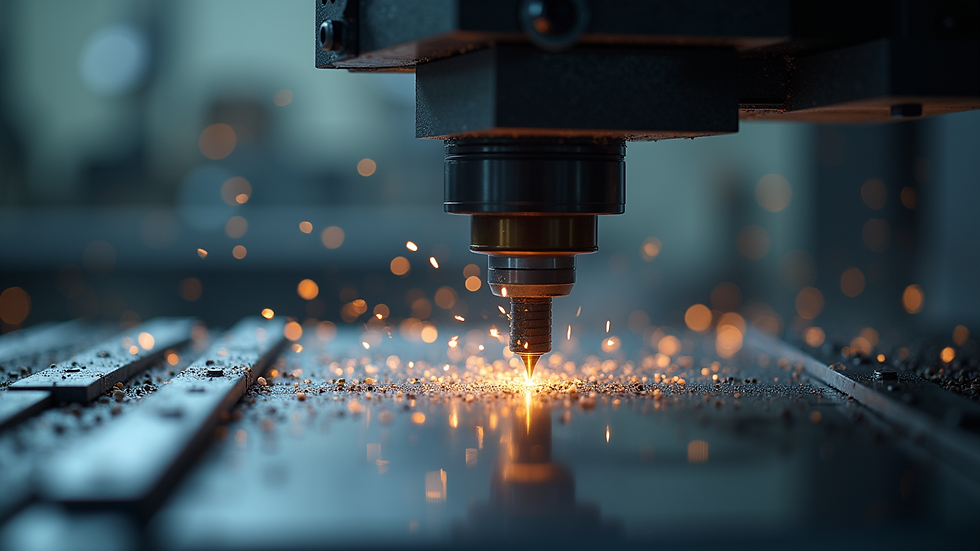
Milling: Milling machines use rotary cutters to remove material from a workpiece. They can perform complex cuts, including slots, holes, and contours. Milling is versatile and widely used for parts requiring detailed shapes and surface finishes.
Turning: Turning involves rotating the workpiece while a cutting tool shapes it. This technique is ideal for cylindrical parts such as shafts, bushings, and pulleys. Turning can produce precise diameters and smooth finishes.
Drilling: Drilling creates round holes in a workpiece. CNC drilling machines can drill multiple holes with exact spacing and depth. This technique is often combined with milling or turning in multi-axis CNC machines.
Grinding: Grinding uses an abrasive wheel to remove small amounts of material for fine finishes and tight tolerances. It is common in finishing operations for hardened metals and precision parts.
Each technique can be performed on various materials, including metals like aluminum, steel, titanium, and plastics. The choice depends on the part design, material properties, and required tolerances.
Key Industrial Applications of CNC Machining
CNC machining is essential in many industries due to its precision and repeatability. Here are some key applications:
Automotive: CNC machining produces engine components, transmission parts, and custom fixtures. High precision ensures performance and safety.
Aerospace: Aerospace parts require tight tolerances and lightweight materials. CNC machining handles complex geometries in titanium and aluminum alloys.
Medical: Medical devices and implants demand biocompatible materials and exact dimensions. CNC machining delivers the necessary accuracy and surface finish.
Energy: Components for turbines, pumps, and valves are machined to withstand harsh environments and high pressures.
Mining and Construction: Heavy-duty parts like gears, couplings, and structural components are manufactured with CNC machining for durability and strength.
Industrial Equipment: Custom parts for machinery and automation systems are produced efficiently with CNC technology.
These applications demonstrate the versatility of CNC machining. It supports both prototyping and high-volume production, making it a valuable asset for manufacturers.

Choosing the Right CNC Machining Technique
Selecting the appropriate CNC machining technique depends on several factors:
Part Geometry: Complex shapes with multiple features may require multi-axis milling. Cylindrical parts are best suited for turning.
Material Type: Harder materials might need grinding for finishing, while softer metals can be milled or turned efficiently.
Tolerance Requirements: Tight tolerances may necessitate precision grinding or fine milling.
Production Volume: High-volume runs benefit from automated CNC setups with minimal tool changes.
Surface Finish: Some applications require smooth finishes achievable through grinding or fine milling.
For example, a titanium aerospace bracket with complex contours would be milled on a 5-axis CNC machine to achieve the required shape and finish. Meanwhile, a steel shaft for mining equipment would be turned and then ground to meet dimensional and surface specifications.
Enhancing CNC Machining Efficiency and Quality
To maximize the benefits of CNC machining, consider these best practices:
Tool Selection: Use the right cutting tools for the material and operation. Carbide tools are common for hard metals, while high-speed steel suits softer materials.
Programming Accuracy: CNC programs must be precise and optimized to reduce cycle times and avoid errors.
Regular Maintenance: Keep machines calibrated and well-maintained to ensure consistent quality.
Material Handling: Proper fixturing and workholding prevent movement and vibration during machining.
Quality Control: Implement in-process inspections and final measurements to catch defects early.
Skilled Operators: Experienced CNC programmers and operators can troubleshoot issues and optimize processes.
By focusing on these areas, manufacturers can reduce waste, improve throughput, and deliver parts that meet stringent specifications.
Future Trends in Industrial CNC Machining
The CNC machining industry continues to evolve with technological advancements:
Automation and Robotics: Integration of robotic arms for loading/unloading parts increases efficiency and reduces labor costs.
Additive Manufacturing Hybrid Machines: Combining CNC machining with 3D printing allows for complex part creation and finishing in one setup.
Advanced Materials: New alloys and composites require specialized tooling and machining strategies.
IoT and Smart Manufacturing: Connected machines provide real-time data for predictive maintenance and process optimization.
Sustainability: Efforts to reduce waste and energy consumption are influencing machining practices and material choices.
Staying informed about these trends helps manufacturers maintain competitiveness and meet evolving industry demands.
Partnering for Reliable CNC Machined Components
Choosing the right partner for CNC machining is crucial. A reliable supplier understands your industry requirements and delivers consistent quality. They offer:
Expertise in multiple machining techniques and materials
Advanced CNC equipment and technology
Rigorous quality assurance processes
Timely delivery and responsive communication
For Canadian manufacturers seeking dependable CNC machined parts, I recommend exploring resources like the industrial cnc machining blog for insights and guidance.
By focusing on precision, quality, and collaboration, manufacturers can build long-term relationships that support their production goals and product excellence.


Comments