Understanding Industrial CNC Machining Processes
Industrial CNC machining processes are essential to modern manufacturing. They provide precision, repeatability, and efficiency that manual methods cannot match. In this post, I will explain the key aspects of these processes, their applications, and how they benefit manufacturers in demanding sectors such as energy, automotive, aerospace, and medical.
CNC stands for Computer Numerical Control. It refers to the automated control of machining tools by a computer executing pre-programmed sequences. This automation allows for complex parts to be produced with tight tolerances and consistent quality. Understanding these processes is crucial for anyone involved in manufacturing or supply chain management.
What Are Industrial CNC Machining Processes?
Industrial CNC machining processes involve using computer-controlled machines to cut, shape, and finish metal or other materials. These machines follow detailed instructions from CAD (Computer-Aided Design) and CAM (Computer-Aided Manufacturing) software. The software translates designs into precise tool movements.
There are several common types of CNC machining processes:
Milling: Removing material using rotary cutters. Milling machines can move in multiple axes to create complex shapes.
Turning: Rotating the workpiece while a cutting tool shapes it. This is typical for cylindrical parts.
Drilling: Creating holes with a rotating drill bit.
Grinding: Using an abrasive wheel to finish surfaces with high precision.
EDM (Electrical Discharge Machining): Removing material using electrical sparks, useful for hard metals and intricate shapes.
Each process has specific applications depending on the part design, material, and required finish.

Key Benefits of Industrial CNC Machining Processes
The advantages of CNC machining are clear and measurable. Here are some of the most important benefits:
Precision and Accuracy: CNC machines can produce parts with tolerances as tight as a few microns. This level of precision is critical in aerospace and medical industries.
Repeatability: Once a program is set, the machine can produce identical parts repeatedly without variation.
Efficiency: CNC machining reduces production time by automating complex tasks and minimizing manual intervention.
Flexibility: CNC machines can switch between different tasks quickly by loading new programs, making them ideal for both prototyping and mass production.
Material Versatility: CNC machines can work with a wide range of materials including steel, aluminum, titanium, plastics, and composites.
These benefits translate into cost savings, higher product quality, and faster time to market.
Common Industrial CNC Machining Processes
CNC Milling
CNC milling is one of the most versatile machining processes. It uses rotating cutting tools to remove material from a stationary workpiece. The machine can move the tool along multiple axes (usually 3 to 5) to create complex shapes such as slots, holes, and contours.
Milling is widely used for parts like engine components, aerospace brackets, and medical implants. The process can handle both soft and hard materials, making it suitable for a variety of applications.
CNC Turning
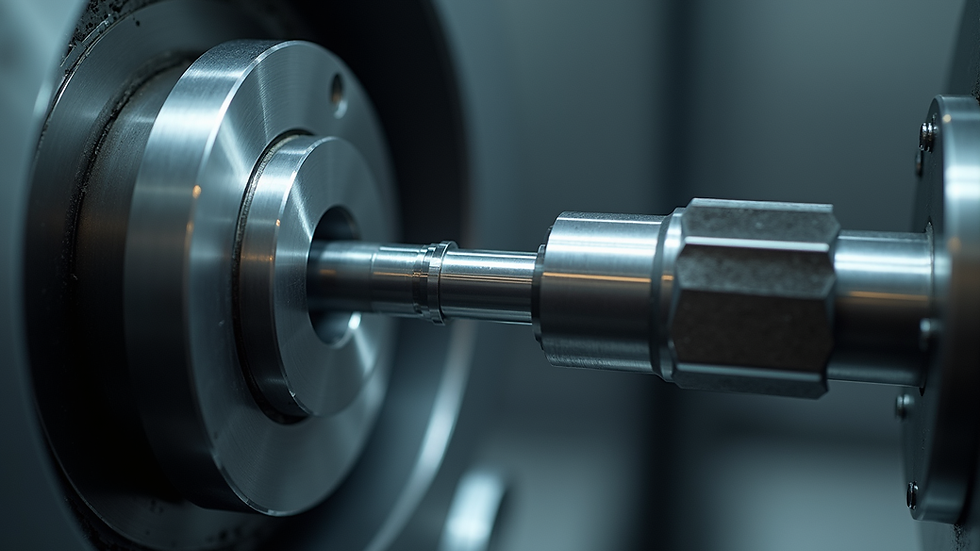
Turning involves rotating the workpiece while a stationary cutting tool shapes it. This process is ideal for producing cylindrical parts such as shafts, bushings, and pulleys. CNC lathes can perform multiple operations including facing, threading, and grooving.
Turning is efficient for high-volume production runs and can achieve excellent surface finishes.
CNC Drilling
Drilling is the process of creating round holes using a rotating drill bit. CNC drilling machines can precisely position holes according to the design specifications. This process is often combined with milling and turning in multi-axis machines.
Drilling is essential in industries where accurate hole placement is critical, such as automotive engine blocks and aerospace assemblies.
CNC Grinding
Grinding uses an abrasive wheel to remove small amounts of material and achieve fine surface finishes. It is often used as a finishing process after milling or turning to improve dimensional accuracy and surface quality.
Grinding is common in tool and die making, as well as in producing precision components for medical devices.
Electrical Discharge Machining (EDM)
EDM removes material by generating electrical sparks between an electrode and the workpiece. It is especially useful for machining hard metals and creating intricate shapes that are difficult to achieve with traditional cutting tools.
EDM is widely used in aerospace and mold-making industries.
How to Choose the Right CNC Machining Process
Selecting the appropriate CNC machining process depends on several factors:
Material Type: Harder materials may require EDM or grinding, while softer metals can be milled or turned.
Part Geometry: Complex shapes with multiple features may need multi-axis milling, while simple cylindrical parts are suited for turning.
Tolerance Requirements: High precision parts may require grinding or EDM finishing.
Production Volume: High-volume runs benefit from processes with faster cycle times like turning and milling.
Surface Finish: Some processes provide better finishes, which can reduce or eliminate secondary operations.
Understanding these factors helps optimize manufacturing efficiency and cost.
Best Practices for Industrial CNC Machining
To maximize the benefits of CNC machining, manufacturers should follow these best practices:
Invest in Skilled Programming: Accurate CAD/CAM programming is essential for error-free machining.
Regular Machine Maintenance: Keeping machines calibrated and clean ensures consistent quality.
Use Quality Tooling: High-quality cutting tools reduce wear and improve surface finish.
Implement Quality Control: Use inspection tools like CMM (Coordinate Measuring Machines) to verify part dimensions.
Optimize Tool Paths: Efficient tool paths reduce machining time and tool wear.
Collaborate with Experienced Partners: Working with knowledgeable CNC machining providers ensures parts meet specifications and deadlines.
These practices contribute to reliable production and long-term success.
The Role of CNC Machining in Canadian Manufacturing
Canadian manufacturers in sectors such as energy, automotive, aerospace, and medical rely heavily on industrial CNC machining processes. These industries demand parts that meet strict standards for safety, durability, and performance.
By leveraging CNC machining, manufacturers can produce components that withstand harsh environments and complex operating conditions. This capability supports innovation and competitiveness in the global market.
For those seeking detailed insights and updates, the industrial cnc machining blog offers valuable resources and case studies relevant to Canadian manufacturing.
Moving Forward with CNC Machining
Understanding industrial CNC machining processes is fundamental for manufacturers aiming to improve product quality and operational efficiency. By selecting the right processes and following best practices, companies can meet the demands of their industries and build lasting partnerships.
Whether producing aerospace components or medical devices, CNC machining provides the precision and reliability required for success. Staying informed and working with experienced machining partners will ensure continued growth and innovation in manufacturing.


Comments